
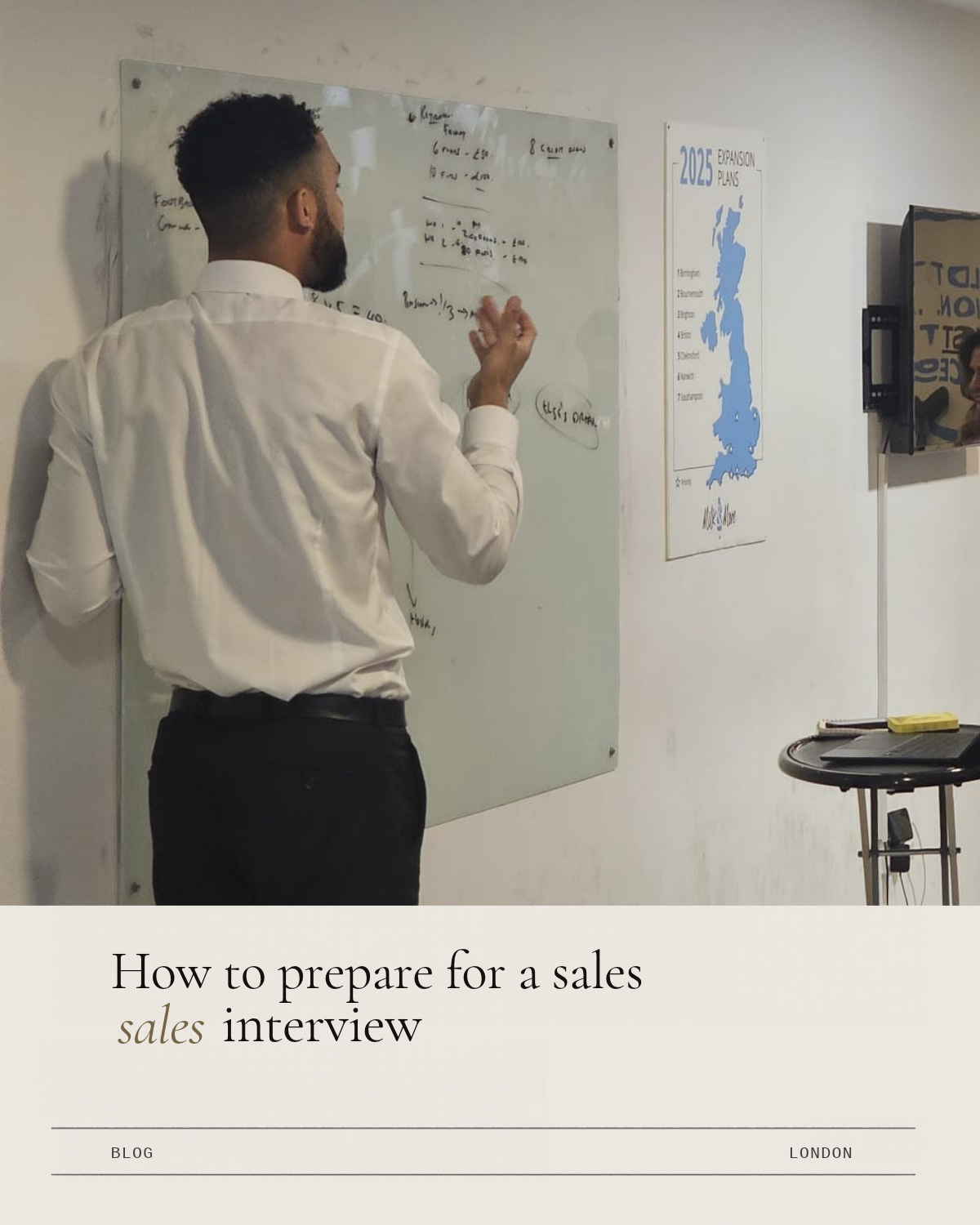
How to Prepare for a Sales Interview (and What We Really Look For)
By Marble Partners
Here’s a little secret about sales interviews: they’re the first sale you’ll ever make with us. The product is you. The customer is the person across the table. And you’ve got roughly half an hour to earn their trust. The good news? That’s exactly the skill we hire for, and it’s one you can prepare for. At Marble Partners, our people represent some of the UK’s best-known brands face to face: on doorsteps, in shopping centres, at events. So when we interview, we’re not ticking boxes on a CV. We’re asking one simple question: would a customer be glad they stopped to talk to you? Here’s how to walk in ready, and what we’re quietly paying attention to while you do.
Before the day: do your homework (properly)
Understand what we actually do. Please don’t recite our homepage back to us. Instead, get your head around what face-to-face marketing is and why brands still invest in it. If you can explain in one sentence why a real conversation can beat a banner ad, you’re already ahead of most candidates.
Get to know the brands. We work across home security, utilities, telecoms, food, pet care and lifestyle. Pick one you’d genuinely enjoy talking about and work out why. Enthusiasm you can back up is far more convincing than enthusiasm you’ve rehearsed.
Prepare three real stories. Most sales interviews circle around the same themes: rapport, resilience and results. Have a moment ready for each:
- a time you won someone round to your point of view;
- a time you heard “no” and kept going;
- a time you set yourself a target and hit it.
They don’t need to come from a sales job. Bar work, retail, coaching a five-a-side team, running a uni society: it all counts. Keep them as stories, not scripts.
Practise out loud. Sales is a spoken craft. Run your answers past a mirror, a mate or your mum. You’ll hear the waffle long before we do.
On the day: treat it like your first shift
- Arrive ten minutes early. Punctuality is a sales skill. Customers notice, and so do we.
- Dress one notch smarter than usual. You don’t need a three-piece suit, but you should look like someone a household brand would trust with its name.
- Put your phone away. Fully away.
- Bring the energy. Eye contact, a proper hello, a genuine smile. Not a performance, just switched on.
What we really look for
This is the bit most companies keep vague. Here’s ours, plainly.
1. Warmth that feels real. People can spot a script from the end of the street. We’re looking for genuine curiosity about others, the kind that makes a stranger relax within thirty seconds.
2. Listening more than talking. The best salespeople ask a good question and then stop talking. If you ask us something thoughtful and actually listen to the answer, that tells us more than any polished pitch could.
3. Resilience, with a sense of humour. Face-to-face work means hearing “no, thanks” quite a lot. We want to know how you bounce back. Be honest about a knock-back: how you handled it matters far more than whether it happened.
4. Coachability. Nobody arrives knowing everything, and we don’t expect you to. What we watch is how you take feedback in the room. If we gently push back on an answer, do you get defensive, or do you get better?
5. Integrity. You’ll be representing names people recognise and trust. We want people who would rather lose a sale than mislead a customer. Every single time.
6. Drive. What do you want from the next year? A promotion, a team of your own, a skill set that opens doors? Ambition is welcome here. Tell us about it.
What we don’t overweight is years of experience. As we’ve said before, potential often matters more than a long CV. If you’ve got the attitude, we can teach you the rest.
Questions you’ll probably hear (and how to think about them)
“Why sales?” Skip “I’m a people person”; everyone says it. Be specific: the buzz of a good conversation, the satisfaction of a target hit, the fact that your earnings and progress reflect your effort.
“Sell me something.” The classic. Don’t panic and launch into features. Ask a question first. Find out what the buyer actually needs, then show how your product fits. That instinct alone puts you in the top tier of candidates.
“Tell us about a time you faced rejection.” Be honest, keep it short, and spend most of your answer on what you did next.
“Where do you see yourself in a year?” There’s no wrong ambition, only a vague one. Give us something concrete.
Questions worth asking us
An interview runs both ways, and the questions you ask say a lot about you. A few good ones:
- What does the first month in the role look like?
- How is training delivered, and who supports new starters?
- What separates the people who thrive here from those who don’t?
- How does progression work, and how quickly can it happen?
And if you’re feeling brave, try the closer: “Is there anything in my background that gives you any hesitation?” It’s bold, it’s honest, and it shows you can handle an objection, which is rather the point.
The bottom line
We’re not looking for the finished article. We’re looking for someone who walks into a room, makes it a little better, and wants to keep getting better themselves. Because true growth happens in the room, and that includes the interview room.
If that sounds like you, take a look at our current opportunities and get in touch. We’d love to meet you.
#SalesInterview #SalesCareers #InterviewTips #MarblePartners #FaceToFaceMarketing
Leave a Reply